Sudan urges the UN to help provide for returning refugees


Sudan called on the United Nations to help provide for 2.2 million people in the country who have returned to their communities after the military reclaimed the areas from paramilitary forces, according to the Sudan Tribune on October 11th.
Around 1.7 million of the returning Sudanese were internally displaced, whilst the rest fled the country and sought refuge in the likes of Egypt, South Sudan, and Chad. They have since returned after the military reclaimed Khartoum, Sennar, and Al Jazirah states from the Rapid Support Forces (RSF).
At a briefing arranged by the UN Office for the Coordination of Humanitarian Affairs (OCHA), Ambassador Hassan Hamid issued an appeal, joined by the UN Refugee Agency (UNHCR), the International Organisation for Migration (IOM), and Doctors Without Borders (MSF).
According to the state-run Sudan News Agency (SUNA), Hamid revealed that “the government is currently working to provide for the immediate needs of returnees, including basic services.”
He also urged various humanitarian organisations to initiate urgent projects that the government prioritises, including restoring basic services, rebuilding devastated facilities that were destroyed by the RSF, and preparing Sudan for an influx of returnees.
Reuters reported on May 28th, just over a week after the Sudanese military announced that “Khartoum state is completely free of rebels”, that billions of dollars’ worth of reconstruction would be needed in the nation’s capital.
Tariq Ahmed, a 56-year-old Khartoum resident, told Reuters that the city “is not habitable. The war has destroyed our life and our country, and we feel homeless even though the army is back in control.”
Sudanese authorities estimated that reconstruction costs sit at $300 billion for Khartoum and $700 billion for the rest of Sudan.
The government said that 815,000 people have returned to Khartoum alone, with a further 2.9 million expected to follow suit.
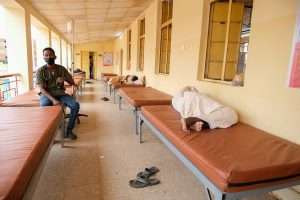
Hamid also sought international support for the Ministry of Health’s fight against a dengue fever outbreak, the root cause being the near decimation of Sudan’s health sector.
He went on to condemn the RSF of “atrocities”, accusing it of using siege and starvation as a weapon of war against civilians in a bid to either kill or displace them in defiance of international pressure, including UN Security Council Resolution 2736.
The resolution demands that the RSF lift its siege on the North Darfur state capital of El-Fasher, which was implemented in April 2024 and has transformed the city into one of the key frontlines in the war. The blockade has cut off virtually all essential resources key to survival from the city of 260,000 residents, including food and medicine.
The military and the RSF have been embroiled in an extremely bloody civil conflict since April 2023 after a power struggle turned violent. Both warring factions have been accused of war crimes.
It is alleged that the military used chlorine gas in combat on at least two separate occasions, which is strictly prohibited under the Chemical Weapons Convention and constitutes a war crime under the Rome Statute.
Throughout the war, the RSF has consistently carried out brutal large-scale assaults targeting innocent civilians and civil infrastructure. In June, the UN warned that the RSF’s ethnically motivated attacks against civilian minority groups may amount to acts of genocide.
Sudan Tribune, Maghrebi.org, Reuters
Want to chase the pulse of North Africa?
Subscribe to receive our FREE weekly PDF magazine