France urges its citizens to leave Mali amid jihadist blockade


The standoff between the Malian authorities and Jama’at Nusrat al-Islam wal-Muslimin (JNIM) is reaching concerning levels. France has now urged its citizens to leave Mali to avoid being blocked in the country amid the jihadist group’s fuel blockade, according to BBC plus agencies on November 7th.
The fuel blockade on Mali’s capital, Bamako, and its surrounding regions was started by the Al-Qaeda linked jihadist group on September 9th, in an effort to destabilise the Malian government. France is the latest country to advise its nationals to leave the West African country while commercial flights are still available, as the US also urged its citizens to leave Mali on October 28th.
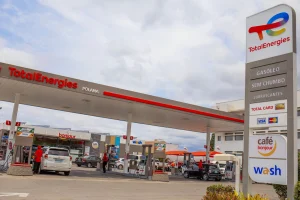
The jihadist blockade has been ongoing for two months, and it has greatly impacted Bamako’s economy and the neighbouring regions with fuel shortages that have put life on hold. Schools were closed for two weeks after Malians struggled to find fuel, which deeply affected businesses that depended on land transportation to function.
Mediterranean Shipping Company (MSC), the world’s biggest shipping company, announced the end of its operations in Mali, due to the landlocked country’s current blockade and security threats.

Since the start of the blockade, the JNIM group has been targeting fuel tankers coming into the country, and one of their attacks destroyed 40 trucks transporting the energy source, according to Reuters. The group even attacked tankers that were protected by Mali’s military, who were trying to escort fuel for the regions affected.
Mali, a landlocked country, depends heavily on fuel imports from its neighbours to generate electricity. Jihadist groups have exploited this dependence by targeting supply routes, using fuel blockades to weaken the government. This disruption threatens to further destabilise the country’s already fragile security situation.
The current Malian government is a military junta led by Gen Assimi Goïta, who took over the country’s power via a coup in 2020. Many Malians had hoped that the new government would be able to resolve the West African country’s security crisis that started in 2012 with the rebellion of the ethnic Tuaregs in the north of Mali.
The Tuaregs’ separatist movement was then taken over by jihadists. Foreign countries have tried to assist the Malian government in solving the security crisis. In 2013, France sent its forces on the ground and the UN peacekeeping mission also sent its troops to help with the deteriorating situation. However, both forces left the country after the current government came into power.
The Malian government has little to no control over large parts of the country, particularly in the north and east, where jihadist groups hold sway. The ongoing fuel blockade is severely impacting Mali’s already faltering economy and could further undermine the military junta’s grip on power.
BBC plus agencies, Reuters, Maghrebi.org
Want to chase the pulse of North Africa?
Subscribe to receive our FREE weekly PDF magazine