Egypt FM reaffirms support for political unity in Libya
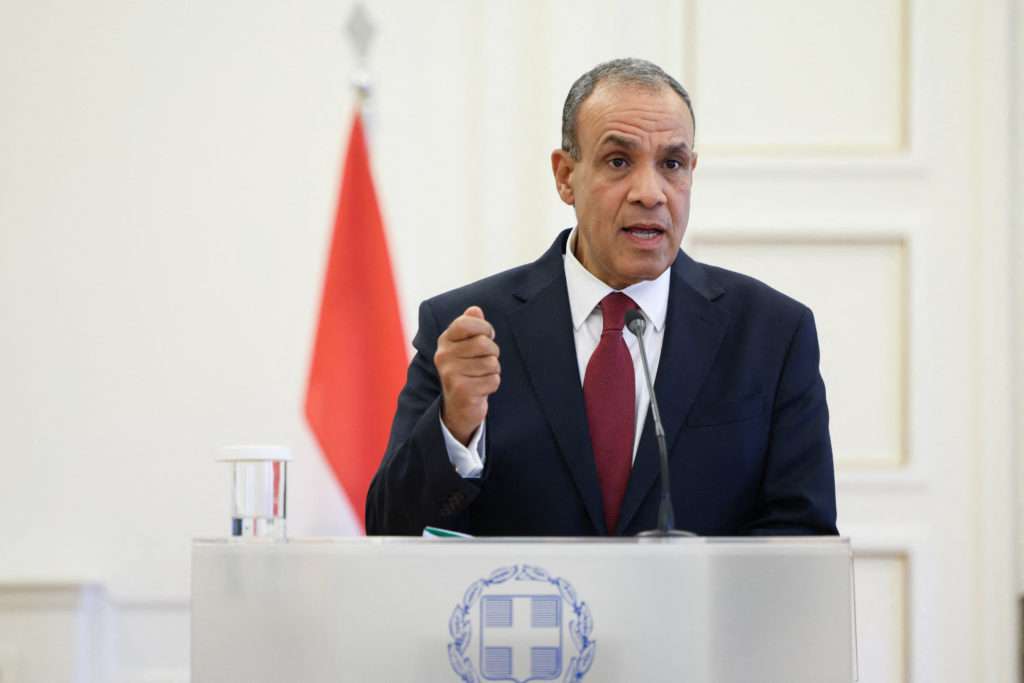
Egyptian Foreign Minister Badr Abdelatty

Egypt’s Foreign Minister, Badr Abdelatty, spoke on 16th November, reinstating his support for unity and sovereignty in Libya, according to Libyan Express.

Abdelatty met with the Chadian Foreign Minister, Abderrahman Abdel Fadil, in Cairo. The discussions mainly focused on opportunities for bilateral cooperation between Egypt and Chad; however, Abdelatty also briefly addressed Egypt’s stance on Libya. He stated that Egypt supports initiatives which aim to unify the Libyan government and move the country closer towards parliamentary elections that will solve the current unrest across the country. He went on to stress that the efforts made by the country must be Libyan-led.
Libya, which is currently divided by two rival government administrations, is in a state of boiling tensions between multiple factions. This ongoing political rift has been marked by violent clashes between armed groups in Western Libya, as well as difficulties in national security.
Abdelatty went on to emphasise the importance of giving greater legitimacy to Libyan institutions such as the House of Representatives. He stated that these frameworks were necessary for arranging democratic presidential and parliamentary elections, which are in accordance with resolutions drafted by the UN Security Council.
There are two main rival powers in Libya. Firstly, the Tripoli-based Government of National Unity (GNU) is a UN-backed administration led by Abdul Hamid Dbeibeh, which is largely recognised by the international community. Secondly, the controversial Tobruk-based Libyan National Army is mostly based in the West and South of Libya and led by military officer Khalifa Haftar. Haftar is a polarising character, feared by some to hold an authoritarian agenda. Furthermore, he is a known supporter of the Rapid Support Forces (RSF) in Sudan, where his alleged provisions of fuel and weapons have provoked a conflict which has seen countless deaths and millions displaced.
Abdelatty’s statements were a reaffirmation of his stances he expressed in a trilateral meeting in October between neighbouring countries, Tunisia, Egypt and Algeria. The foreign ministers of all three nations were reported to have urged the unification of these divided Libyan parties in order to establish peace.
Ultimately, both Abdelatty and Fadil’s statements underline the role which regional efforts from African nations can play in de-escalating and managing arising conflicts across the continent. However, while their support for unification exists within a wider global effort to push for political stability in Libya, the existing fragility and contrasts between the two current rival governments bring into question whether such an arrangement can be met.
Libyan Express, Maghrebi.org
Want to chase the pulse of North Africa?
Subscribe to receive our FREE weekly PDF magazine