Congo mining bridge collapse kills around 32 people
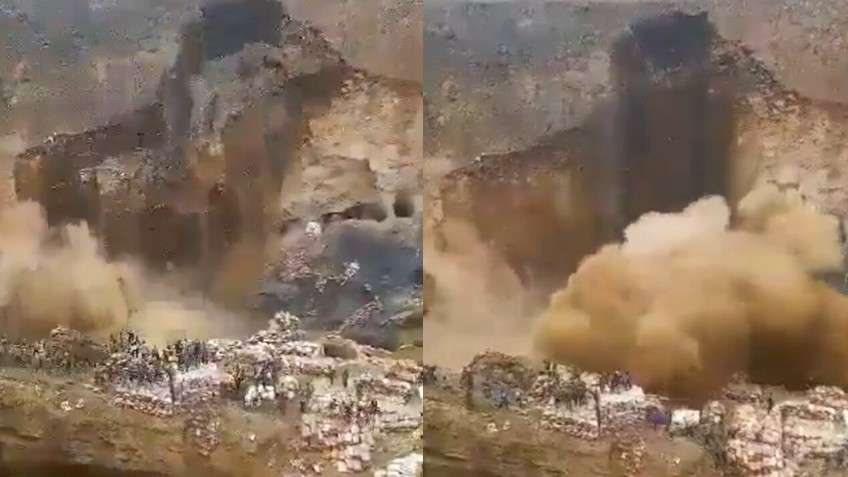
Congo mine bridge collapses killing 32 people and injuring many more.

Around 32 people were killed as a result of a bridge collapse in Congo’s copper-cobalt Kalando mine in the Lualaba province, according to a Reuters report on 16th November.
Provincial interior minister, Roy Kaumba Mayonde, said that the bridge had collapsed onto a flooded zone. Miners trying to get to the other side in a hurry across a makeshift bridge that was built across the flooded trench died in the attempt.

Mayonde confirmed 32 deaths, and reported that the search for more bodies was ongoing. He added that there was a formal ban on accessing the mining site due to heavy rain and risk of landslide, but miners “forced their way into the quarry”.
The artisanal mining agency said that about 20 people were injured and taken to the hospital.
There has been a suspected military role in the tragedy, with Congo’s Artisanal and Small-Scale Mining Support and Guidance Service agency (SAEMAPE) reporting that gunfire from the military caused panic among miners who then crossed and made the bridge collapse.
It was reported that miners were “piled on top of each other”, and the Human Rights Commission (CNDH) shared images of miners digging out bodies stuck under rubble. The CNDH officials said that about 10,000 people work at Kalando, and authorities have suspended operations. They have also called for an investigation of the military’s role in the tragedy.
The Kalando site has always been disputed between miners who want to organise digging, and the mine’s legal operators involved with the Chinese.
Congo’s artisanal mining sector employs 1.5–2 million people and indirectly sustains more than 10 million of the Congolese population, with more than 200,000 people estimated to be working in illegal cobalt mines alone.
Cobalt is used in batteries of EVs, mobile phones, and laptops and is a highly essential mineral in the production of batteries, referred to as ‘battery metal’. According to a Reuters report, Congo supplies 74% of the world’s cobalt and holds 72% of cobalt reserves.
Congo’s mineral wealth has been subject to unregulated practices, child labour, miners’ deaths, and exploitation. As unregulated cobalt became untraceable without government checks, the government introduced export quotas in October this year, which regulate how much cobalt can leave the country and encourage processing at home rather than exporting raw cobalt.
On 13th November, Entreprise Générale du Cobalt (EGC)—a state-owned subsidiary created in 2019—announced its first batch of 1,000 tonnes of traceable artisanal cobalt in Kolwezi. The company said its tracking system will help clean up the supply chain and bring Congo’s production in line with international ESG standards.
As China exports most of the Congolese reserves, the US has also shown interest in the mineral-rich country to equal China in the trade war.
Reuters, GeoNews, Maghrebi.org
Want to chase the pulse of North Africa?
Subscribe to receive our FREE weekly PDF magazine