Morocco: Child marriage requests have dropped, Minister reports
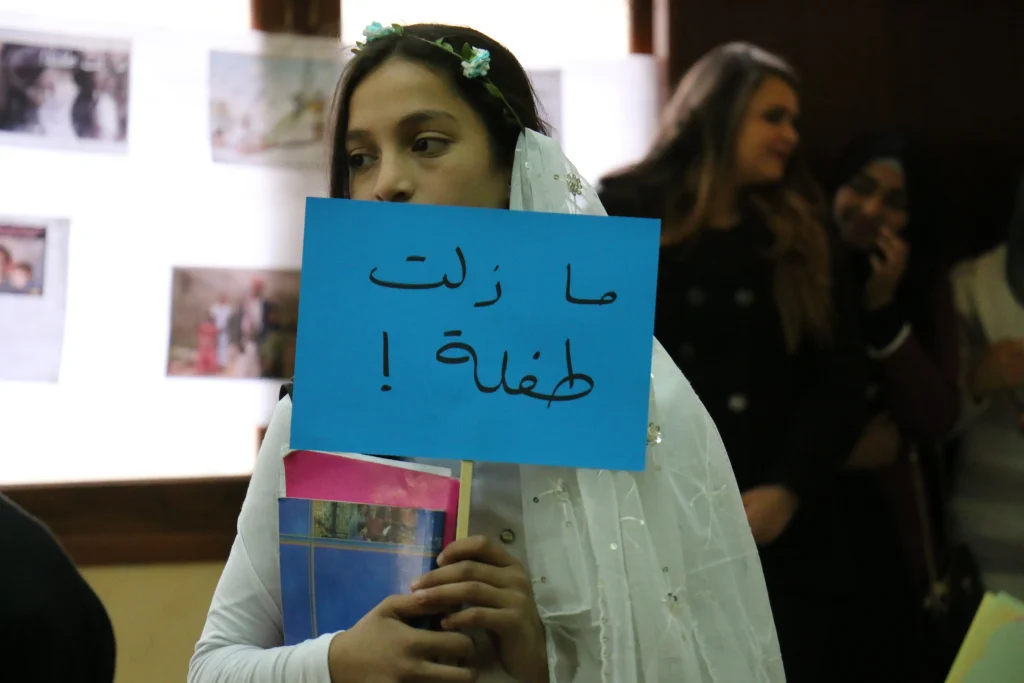
A girl holds a sign that reads "I am still a child!" against child marriage practices (via UNFPA)

Moroccan Justice Minister Abdellatif Ouahbi announced in Parliament on December 1 that child marriage requests had reduced by at least 20,000 in 2024, marking roughly a 66% reduction from 2017, according to Moroccan government-friendly Yabiladi.
The recorded cases of child marriage in 2017 stands at 26,298, whereas in 2024 there were 8,955. He attributed the significant reduction to increased social awareness among people.
Morocco’s family code called Moudawana, which was first introduced in 2004, raised the minimum age to be legally married from 15 to 18. However, exceptions were allowed under judicial consent, which did not eliminate the issue of child marriage.

Another loophole that facilitated child marriage is a Moroccan practice called “Al-Fatiha”, which means two people get married under cultural and religious recognition, but with no legal registration. Families opt for this to avoid paying expensive registration fees, or if the participants are below the legal age of marriage.
Young girls in Morocco, particularly in rural areas, are often sold into marriage, while other girls take jobs as maids in big cities and get pregnant by employers under the false pretence of marriage. According to Girls Not Brides, marriage is seen as a financial security, which is often the reason why some judges consent to child marriages.
Education also plays a role in child marriages, as a 2019 study by UNICEF found that 75% of parents who married their children before the age of 18 were illiterate, and 25% of the girls who were married had no education.
This can be seen in the numbers presented by the Minister, who said that in 2020, about 11,830 child marriage requests came from rural areas, compared to 4,527 from urban areas. The COVID-19 pandemic also exacerbated the financial situation of poor households and, therefore, exposed young girls to child marriage.
Along with these reasons, there are others, including gender inequality, social norms, misinterpreted religious texts, and lack of awareness.
In 2024, Morocco reviewed its family code for the first time in over 20 years, with the intention of including women’s rights in child custody, inheritance, and others areas. Women’s Rights Activists at the time were seeking a complete ban on child marriages, but have not been successful, even as of today.
Yabiladi, Girls Not Brides, DW News, Maghrebi.org

Want to chase the pulse of North Africa?
Subscribe to receive our FREE weekly PDF magazine