BP reopens office in Libya’s capital
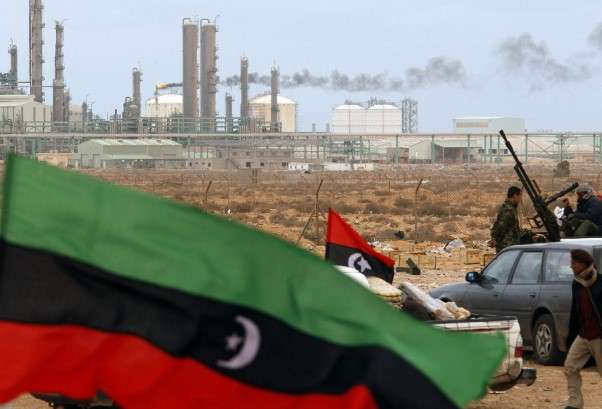

BP has taken a significant step to deepen its footprint in Libya’s energy industry with the reopening of its Tripoli office on 10 December, a move the National Oil Corporation (NOC) described as a pivotal reinforcement of their partnership, as reported by the National Oil Corporation.
The restored headquarters is intended to function as a central platform for accelerating joint initiatives and shaping future exploration and development opportunities across the country’s oil and gas sector.
The National Oil Corporation (NOC), which directs Libya’s state-owned energy enterprises from its Tripoli base, noted that its Sirte Oil Company subsidiary reached its strongest daily crude production levels in 20 years earlier this year, indicating the growing economic potential in Libya’s energy sector.

The announcement on December 10 followed a high-level meeting between NOC Chairman Masoud Suleiman and senior BP representatives, including Nader Zaki, Regional President for the Middle East and North Africa, and Mahmoud Ismail, BP’s Vice President and General Manager in Libya.
Their discussions focused on the implementation of the Memorandum of Understanding signed in July, which outlines cooperative efforts to reassess Libya’s mature fields and evaluate potential in areas that have yet to be developed.
BP and the NOC reiterated their intention to deliver the drilling operation efficiently and responsibly, framing it as a core component of a broader strategy to enhance the long-term performance of Libya’s oil sector.
Recent signs of renewed stability in Libya’s oil sector are underscored by the return of major international players, with BP reopening its Tripoli office and Shell expected to resume operations by the end of 2025 after years of suspension due to instability in Libya and the wider region.
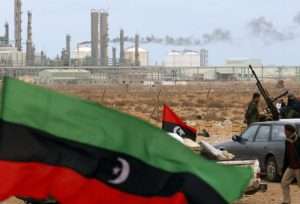
Libya’s petroleum industry remains central to its economy, supported by the continent’s largest proven crude reserves, estimated at 48.36 billion barrels.
Libya’s oil production and revenues have long been entangled in political disputes between the eastern and western administrations, with control over resources often shaping power dynamics. As major international energy companies like BP and Shell return, questions remain over whether their involvement will benefit the Libyan population at large or if it will reinforce the existing regional division between the east and west of the country.
National Oil Company, Maghrebi.org

Want to chase the pulse of North Africa?
Subscribe to receive our FREE weekly PDF magazine