Fergus Kell: Tanzania’s elections test the nation’s future


Tanzania will never be the same again after the violence that engulfed its October elections. A crackdown on protesters by security services – though still not acknowledged as such by government officials – reportedly killed hundreds of civilians under the cover of a communications shutdown.
For decades mainland Tanzania has prided itself on relative stability in a turbulent region, with its citizens watching neighbours in East and southern Africa grapple with disaster: Rwanda’s genocide, Kenya’s post-election violence in 2007–08, entrenched conflict in eastern DRC and an Islamist insurgency just across the border in northern Mozambique. This time catastrophe struck at home.
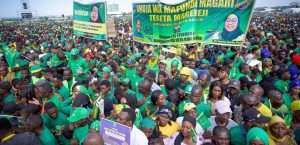
With more protests looming, the government’s diversion of blame onto citizens and foreign partners is compounding the harm to Tanzania’s global standing and increasing the risk of more damaging instability.
Unexpected escalation

All pre-election assessments correctly predicted a landslide win for President Samia Suluhu Hassan, with all serious opposition incapacitated.
Many had even anticipated that an absurdly large margin of victory would be announced; Samia was declared as receiving 98 per cent of the vote with a turnout of nearly 33 million in a country where the entire voting-age population is 35 million.
But not even Tanzanians themselves expected the crisis that unfolded. An election day that began with calm and reports of near-empty polling stations rapidly descended as protesters took to the streets in major cities across the country, incensed by elite impunity and the lack of real democratic choice.
Security forces were deeply unprepared and responded with deadly force. The timeline that followed remains murky due to the internet shutdown.
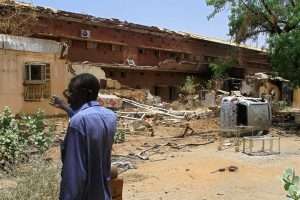
Images and videos verified by major international media outlets including the BBC and CNN appear to show fleeing protesters shot from behind, bodies piled in morgues and satellite evidence indicating the digging of mass graves. The Tanzanian government dismissed the CNN report as ‘slanderous’ and criticized other international media for ‘negative’ reports. Diplomatic sources indicate a credible toll of around 1,000 deaths.
Deflecting accountability
Tanzanian officials initially disputed reports of deaths, but in a later speech at the opening of parliament, President Samia offered condolences for the loss of life and announced an internal commission of inquiry into events.
Yet government statements continue to forestall prospects for real accountability.
Anger at Tanzania’s elite was unquestionably a driver of demonstrations, as evidenced by some targeting of businesses reportedly associated with ruling party politicians. However, officials have repeatedly pointed to property damage to assign criminal intent to protesters and deflect responsibility for the killings.
The presence of some destructive elements should not disguise the broader reality of the protests – as decentralized, organic and driven by deep-seated discontent.
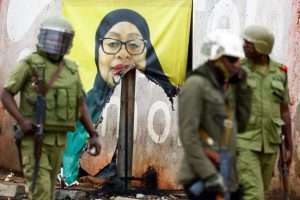
These are key features that Tanzania shares with high-profile ‘Gen-Z’ movements elsewhere, such as in Kenya and Madagascar, albeit with differing contexts and outcomes.
Rather than engage with these drivers of discontent, the government appears set on avoiding being held to account. Appointments to the new commission of inquiry include the immediate former defence minister; and the creation of a new youth affairs ministry was accompanied by the president’s decision to add her daughter and reappoint her son-in-law to cabinet.
President Samia may well now be increasingly wary of the public’s capacity for unrest. But such appointments, alongside the decision to discard several high-profile previous ministers from the new cabinet, indicates confidence that opponents within the ruling CCM party are unwilling or unable to mount a threat of their own to her power.
That no party officials have broken rank to criticize the violence is the most damning indictment yet of the erosion of the CCM’s internal tradition of debate and disagreement.
Blaming external forces
The president and newly appointed prime minister have also accused foreign actors of influencing demonstrations with the aim of destabilizing Tanzania. The government has denounced media reports of killings as ‘information warfare’ and critical statements by the EU and others as ‘political interference’.
Despite the government’s inconsistency of attributing blame externally while insisting upon a purely internal response, fragmented responses from international partners have done little to help.
While African Union and Southern African Development Community election observer mission statements were outspoken, no consequences have followed and they were undercut by a blandly uncritical East African Community report.
The Commonwealth Secretariat’s own efforts to engage failed after announcing Malawi’s former president Lazarus Chakwera as special envoy. His appointment, seen as lacking gravitas, was quietly rejected by the Tanzanian government and openly criticized by civil society groups.
Yet continued government deflection will only entrench the root causes of the election crisis – making further instability a matter of when, not if.
With the EU debating a freeze of its development assistance, President Samia has warned citizens of a difficult financing context ahead. It is notable that the two largest investment projects agreed for her new term are a $1.4 billion railway refurbishment with China and a $1.2 billion Russian uranium project – neither likely to be fazed by governance concerns.
Western partners had already slashed aid commitments well before the current crisis in favour of trade and private sector facilitation. They will now further struggle to engage on similar terms given the Tanzanian government’s anti-foreign and unrepentant rhetoric and the sharp increase in political risk facing investors.
Tanzania’s foreign policy has always sought to manage a tension between the country’s longstanding tradition of pluralism in partnerships and its deeply held suspicions of foreign engagement. The government’s response to the election crisis is entrenching the latter at the expense of the former, a move that risks translating short-term disruption into long-term economic losses.
The way forward
Fresh protests have been called for Tanzania’s independence day on 9 December, prompting the government to cancel planned celebrations. It is unclear whether there will be another major public mobilization, given the combination of anger and fear sparked by the killings.
Yet continued government deflection will only entrench the root causes of the election crisis – making further instability a matter of when, not if.
A starting point for de-escalation would be to recall the commission of inquiry and appoint trusted figures, including reform-minded CCM elders, to the panel. This remains no substitute for longer-term responses, most critically a long-awaited new constitution that was promised to be tackled within this term.
National initiatives must also not shy away from external input; Kenya’s appointment of a commission with international experts for its own constitutional review after 2008 provides a precedent.
The current government posture, however, is pushing international actors into making costly choices. They are being forced to either take a harder public line in criticizing avoidable atrocities or continue pursuing long-term joint initiatives with a regionally significant strategic partner – when both should still be possible.
READ: Martin Jay: The EU’s fantasy of funding Ukraine
In navigating this in the coming weeks, Western partners should also remain mindful that their choices will be watched especially closely ahead of elections in Uganda in 2026 and Kenya in 2027.
Shock at the scale of demonstrations on election day may help to explain – though in no way excuses – the violent response that followed. With the ICC being urged to investigate and further protests imminent, Tanzania’s leaders have to take their share of responsibility and stop trying to cling to an untarnished image. Rebuilding Tanzania from the ground up must begin with genuine concessions to citizens.
The views expressed in this article belong to the author and do not necessarily reflect the editorial policy of Maghrebi.org. Fergus Kell is a research fellow with the Africa Programme at Chatham House. His research is focused on the political economy of Kenya and Tanzania, on which his commentary has appeared in media outlets including Reuters, AFP, RFI, Al Jazeera and Voice of America.
If you wish to pitch an opinion piece, please send your article to grace.sharp@maghrebi.org

Want to chase the pulse of North Africa?
Subscribe to receive our FREE weekly PDF magazine