South Sudan faces sixth year of climate-driven floods
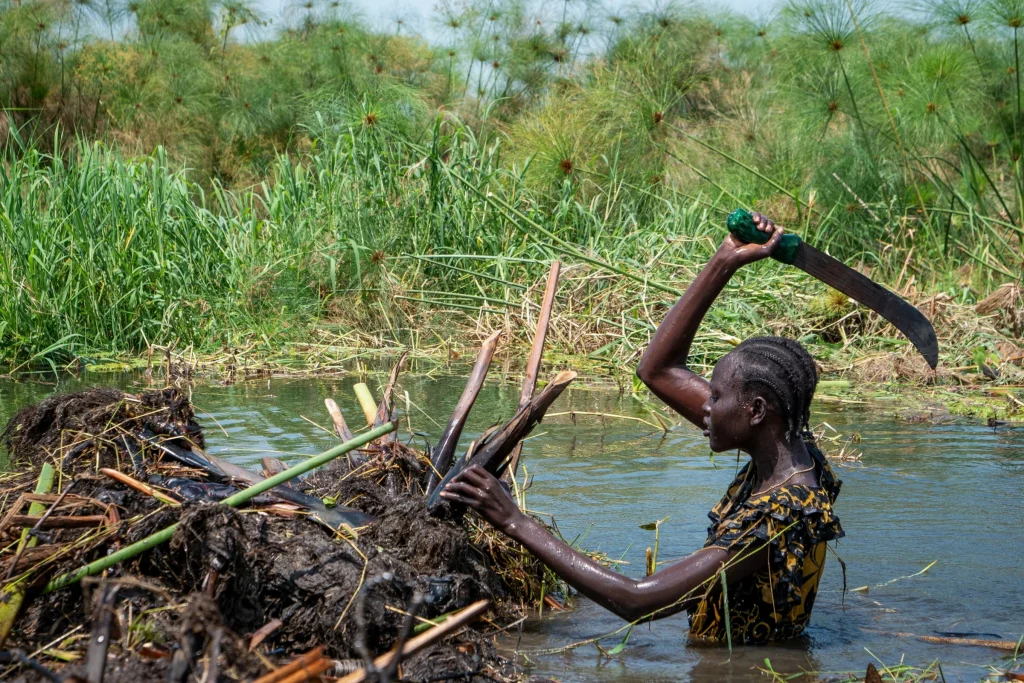
Yar Mabior Ajith, from the Akuak community, cuts vegetation in order to expand the ground of the island where her home is located, in the swamps along the Nile River in Akuak, South Sudan, Nov. 8, 2025. (AP Photo/Florence Miettaux)

A remote community in South Sudan is struggling to survive as prolonged Nile flooding, exacerbated by climate change, has submerged homes, farmland, and livelihoods for a sixth consecutive year, according to AP News on 14 December.
In the swampy lands along the Nile River, the small Akuak community is fighting a daily battle against rising waters that swallow their land and homes, a crisis they say is driven by intensifying climate change. The region is now enduring its sixth consecutive year of catastrophic flooding, forcing residents to struggle to save their ancestral territory.
Standing in waist-deep water, Ayen Deng Duot, a mother of six, uses a machete to chop thick papyrus roots and throws them, along with mud and clay, onto the surface to build up the island where she and her family live. This traditional technique of layering plants and soil has been practised for generations in this swampy region, but the more frequent and severe floods have made it increasingly difficult to maintain these islands, forcing families to spend hours each day hauling material by hand to keep water at bay.

“We have to do this work every day, so that water does not chase us away,” Duot said as she paused from her task.
According to reports, around 2,000 people in Akuak belong to the Dinka ethnic group and have traditionally relied on fishing, farming and raising cattle. But rising waters have submerged farmland, leaving fishing as the primary and often only source of food and income. With repeated floods and little dry land left, many families have lost livestock, crops and access to schools and health facilities.
Across South Sudan, the humanitarian impact of flooding has been severe. According to humanitarian agencies, more than one million people face the threat of flooding this year, with hundreds of thousands already displaced. The crisis has also compounded other challenges, including outbreaks of waterborne diseases and food shortages.
The floods have transformed life for many communities in the world’s youngest nation, where it was once common for floodwaters to recede during the dry season. Now, extended periods of high water have become the norm, reshaping the landscape permanently and increasing hardship for those who remain.
Despite the hardship, many Akuak residents are determined to stay on their ancestral land, reinforcing their islands and clinging to hope that the waters will one day recede enough to allow them to resume farming and rebuild their lives.
AP News, Save the Children, Maghrebi.org

Want to chase the pulse of North Africa?
Subscribe to receive our FREE weekly PDF magazine