Trump administration plans breakup of US climate research centre
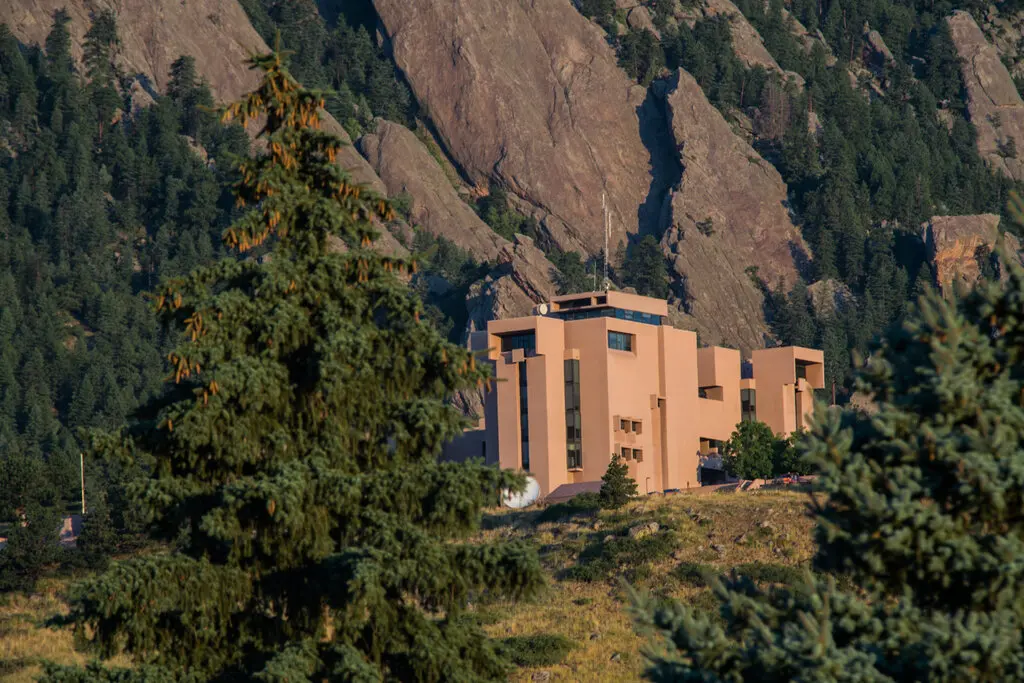
National Center for Atmospheric Research in Boulder, Colo., is responsible for many of the biggest scientific advances in humanity’s understanding of weather and climate since its founding in 1960. Credit: Caine Delacy for The New York Times
Scientists warn of risks to public safety as the White House moves to dismantle a leading US climate research centre, reported The Guardian plus agencies on 17 December.
The Trump administration has announced plans to dismantle the National Centre for Atmospheric Research (NCAR) in Boulder, Colorado. The centre is one of the world’s leading institutions for weather and climate science, prompting widespread criticism from scientists, lawmakers and local officials.
Founded in 1960, the National Centre for Atmospheric Research has been responsible for many of the most significant advances in understanding Earth’s atmosphere, oceans and climate systems. Its research in aircraft, supercomputing facilities and atmospheric models is widely used to forecast hurricanes, floods, wildfires and other extreme weather events across the United States.

The decision was revealed on December 17 in a social media post by Russell Vought, director of the White House Office of Management and Budget. Vought described NCAR as “one of the largest sources of climate alarmism in the country” and said the federal government would be “breaking up” the institution. He added that “a comprehensive review is underway” and that “any vital activities such as weather research will be moved to another entity or location.”
NCAR is operated by the University Corporation for Atmospheric Research, a nonprofit consortium of more than 100 universities, though the vast majority of its funding comes from the federal government, primarily through grants from the National Science Foundation totalling hundreds of millions of dollars.
Scientists and meteorologists said dismantling the centre would severely damage U.S. scientific capacity and public safety. The institution was originally created to provide atmospheric scientists with shared resources, such as supercomputers, that individual universities could not afford.
The centre’s work has had direct real-world impacts. Research into atmospheric downdrafts during the 1970s and 1980s led to the development of wind shear detection systems around airports, helping address the cause of hundreds of aviation accidents. NCAR scientists also developed GPS dropsondes, instruments released from aircraft to gather crucial data inside hurricanes and other severe storms to improve forecasts.
“It’s the beating heart of our field,” Kim Cobb, a climate scientist and director of the Institute at Brown for Environment and Society, wrote on social media. “Generations of scientists have trained there, and almost everyone I know relies on deep collaborations with NCAR scientists.”
Katharine Hayhoe, a climate scientist at Texas Tech University, described the institution as “quite literally our global mothership.” She wrote that NCAR “supports the scientists who fly into hurricanes, the meteorologists who develop new radar technology, the physicists who envision and code new weather models, and yes, the largest community climate model in the world.” She added, “Dismantling NCAR is like taking a sledgehammer to the keystone holding up our scientific understanding of the planet.”
The Trump administration has repeatedly dismissed climate change as a hoax and labelled many climate research efforts as ideological or alarmist. Officials said NCAR had supported projects they viewed as political, including research on protecting wind turbines from hurricanes and incorporating Indigenous knowledge into climate impact studies.
Experts said much of the centre’s work is focused on basic atmospheric science rather than climate activism. Roger Pielke Junior, a political scientist at the American Enterprise Institute, said, “if you asked me where you’d find the most politicised elements of climate research, NCAR would be way down that list.” He added, “destroying it makes no sense.”
The announcement has intensified tensions between the White House and Colorado officials. Governor Jared Polis said the federal government had not informed the state of any formal plans. “If true, public safety is at risk and science is being attacked,” he said. “NCAR delivers data around severe weather events like fires and floods that help our country save lives and property, and prevent devastation for families.”
Local leaders warned that dismantling the centre would also have serious economic consequences for Boulder, where NCAR employs hundreds of highly skilled workers and serves as a major scientific anchor. Boulder Mayor Aaron Brockett said the loss of the facility could drive away research firms and leave the city with empty landmark buildings and significant job losses.
Critics also argue that dismantling NCAR could undermine U.S. leadership in weather and climate science at a time when extreme weather events are becoming more frequent and severe. The legal authority and timeline for breaking up the centre remain unclear, and the National Science Foundation has yet to outline how the administration’s plan would be carried out.
The Guardian via AP plus agencies, New York Times, Maghreb.org
Want to chase the pulse of North Africa?
Subscribe to receive our FREE weekly PDF magazine