Aid cuts force Native American tribes back into bison hunting
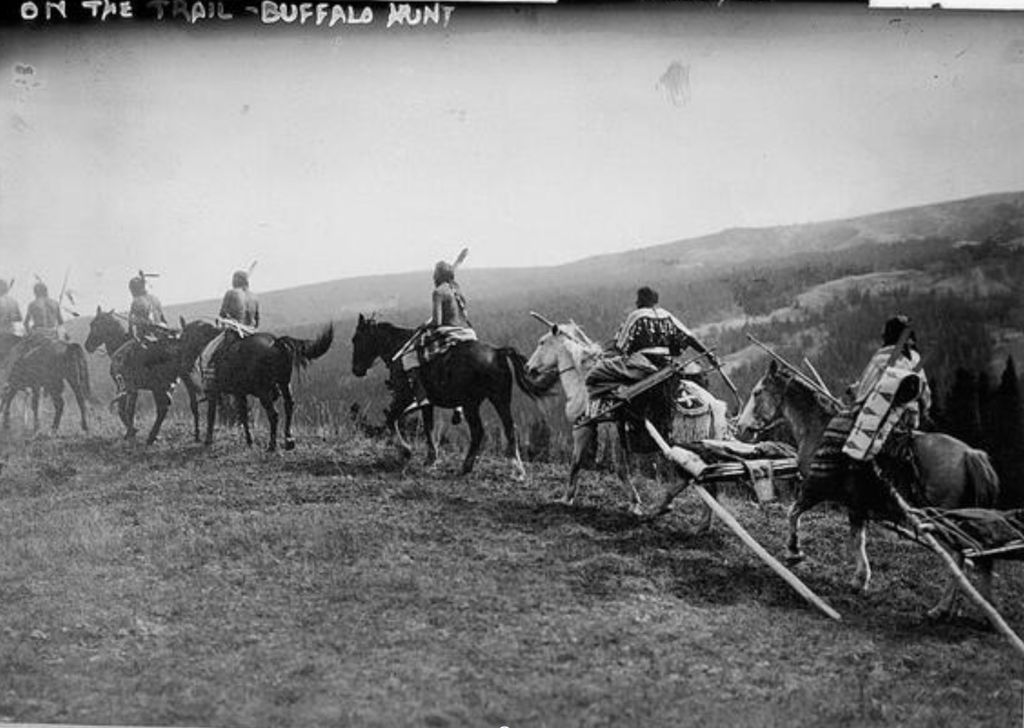
A historical image of Native Americans hunting buffalo on horseback. This traditional practice was integral to the culture and survival of indigenous peoples in North America.

Tribal communities in the United States (U.S) are using their bison herds for food as federal aid breaks down reported AP News on 13 November.
Across the Great Plains of the U.S, tribal communities are turning to an unconventional source of food aid as federal nutrition programmes falter. Amid the prolonged federal government shutdown and disruption to the Supplemental Nutrition Assistance Program (SNAP), some Native American tribes are culling portions of their restored bison herds to feed their people.
At the heart of the story is the Fort Peck Assiniboine and Sioux Tribes in northern Montana, where tribal officials authorised the harvesting of 30 bison in October which is the equivalent of about 12,000 pounds (5,440 kg) of meat.
“We were bringing it up with the tribal council. What would happen if the government went bankrupt? How would we feed the people?” said bison-manager Robert Magnan. “It shows we still need buffalo.”
With approximately one-third of the Fort Peck reservation’s members relying on monthly SNAP benefits which is almost triple the national rate, the partial payments and delays triggered by the shutdown created serious food-insecurity pressures. The meat harvested from tribal herds was processed and distributed to community members as a temporary measure while federal mechanisms failed.
This practice is not isolated as other tribes, such as the Blackfeet Nation and the Cheyenne River Sioux Tribe in South Dakota, have similarly harvested bison or other game animals to supply food to members amid the breakdown of federal aid channels.
“It’s the obligation they incurred when they took our lands, when they stole our lands, when they cheated us out of our lands,” said Mark Macarro, president of the National Congress of American Indians, in reference to the U.S. government’s trust and treaty duties to tribal nations.
These tribes had, in previous years, invested in restoring wild bison herds the animals once central to Plains-tribes’ survival before near-extinction in the nineteenth century. That restoration has now become a buffer in times of crisis. As historian Dennis Smith (Assiniboine) pointed out, the mass slaughter of bison in the 1800s precipitated severe hardship and starvation for tribal peoples.
In Montana, unemployed tribal members like Dillon Jackson‑Fisher and his wife, who recently received only $196 instead of their typical $298 SNAP payment, walked four miles to collect boxes of food which included about 2 pounds of bison meat. “Our vehicles in the shop, but we have to put food on the table before we pay for the car, you know?” Jackson-Fisher said.
Outside of Montana, other Indigenous communities are adapting in their own way. For example, the Mi’kmaq Nation in Maine stocked their food bank with hatchery trout and locally hunted moose, while the Choctaw Nation in Oklahoma set up meat-processing facilities to handle distributions of deer meat.
The broader picture raises questions about long term sustainability as many tribal officials emphasise, they cannot rely permanently on extensive culling of herds. Ervin Carlson of the Blackfeet buffalo programme said, “We can’t do that many all the time. We don’t want to deplete the resource.”
In the midst of systemic federal disruption, these tribes are demonstrating resilience by leveraging traditional food systems and wildlife conservation efforts to fight hunger. But their efforts also show how fragile Indigenous food security is when government programs fail, and treaty obligations are not fully met.
AP News and Maghrebi.org
Want to chase the pulse of North Africa?
Subscribe to receive our FREE weekly PDF magazine