“A proto-state of militias”: why Libya struggles for unification
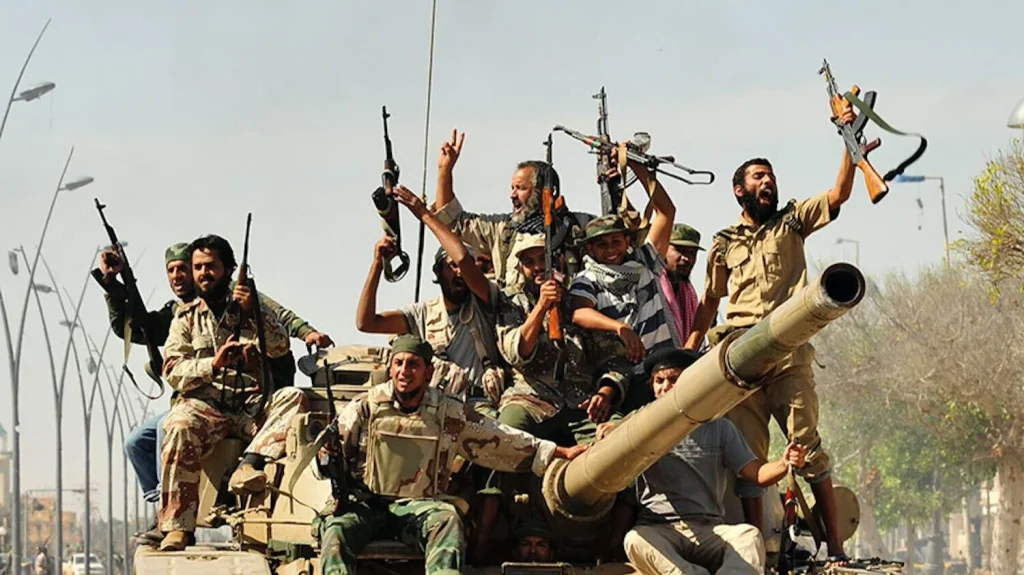

Tripoli and Benghazi remain as two separate bases of power in Libya. As first published in the Libya Gazette, it is one country in name but to all intents and purposes two separate governments administering separate programmes. Naturally, the status of this division in the future is of interest amongst those engaged in Libya. Senior Associate Research Fellow at the Institute for International Political Studies in Milan, Federica Saini Fasanotti, recently published an article in GIS titled “Libya’s fractures drift toward permanence” and it is in light of this article that we spoke of Libya’s divided status.
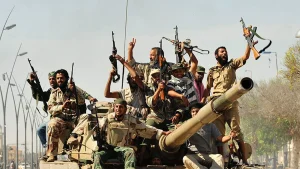
Fasanotti is not optimistic about the chances of Libyan unification and doubts whether the desire for unification exists within the political class: “I think that at the moment every political actor is very happy about the situation: a proto-state where militias and warlords act with no accountability at all, able to perpetrate crimes of every kind.” This relationship with warlords and militia groups is fundamental to the running of the Government of National Unity (GNU) based in Tripoli and in May 2025 the assassination of Stability Support Apparatus (SSA) commander Abdel Ghani al‑Kikli triggered some of the worst urban fighting Tripoli has seen in years. Rival armed groups including the GNU-linked 444th Infantry Brigade and the SSA clashed violently in densely populated districts like Abu Salim, causing civilian deaths and leading the GNU to reshuffle the command of the capital’s Internal Security Agency.
For this current state of affairs to change is unlikely and according to Fasanotti: “Libya would need a miracle: probably a huge set of protests able to erase the political class which is profoundly corrupted. I firmly believe that to go on towards a better scenario Libya would need an international military contingent able to control the situation on the ground.” At the present moment international actors are naturally reluctant to militarily engage in Libya. The GNU and the Libyan National Army (LNA) based in Benghazi provide enough of an economic and political framework through which foreign state and non-state actors can engage with the country so there is little reason for an international military contingent to engage the militia groups across the country.

But foreign engagement should not be viewed as the sole reason, nor potential solution, to Libya’s fracture/ Libya’s social fabric is still defined by tribal loyalty and regional competition. Militias and factional networks emerged not after 2011, but were empowered by the collapse of centralised authority and the absence of a national military capable of monopolising violence: “We must not forget the nature of Libyan society… a tribal society with enormous difficulties in working together for the common good,” she says. External actors then exploited these fissures: Turkey’s military backing of Tripoli, the UAE and Russia’s support for Haftar in the east, and Europe’s reliance on coastal militias to curb migration all entrenched existing divisions and rewarded armed power.
As well as these factors, Fasanotti claims that the Libyan population on the whole remains unmotivated by the prospect of political change and does not believe in the actuality of unification herself: “Years ago I was a strong supporter of federalism, one similar to Germany or Switzerland…now I think it is too late… the country is too fractured, divided and above all with a very unmotivated population” . This lack of motivation perhaps stems more from the uncertainty of what regime would replace the GNU and LNA led governments in Tripoli and Benghazi rather than an apathy to the political division and militia backed regimes. The fragility of the GNU’s legitimacy was laid bare in May 2025, when mass protests erupted in Tripoli. Demonstrators angered by militia violence and the lack of security demanded the government step down. In response, several senior ministers resigned in solidarity, signalling rare cracks in the ruling establishment. Yet crucially, those resignations did nothing to dismantle the power of the militias.
Fasanotti’s assessment paints a sobering picture: Libya’s divisions are structural, enduring, and unlikely to be resolved through conventional political processes alone. Militias and armed factions remain the true power brokers, while the population and political elites alike are trapped in a cycle of uncertainty and mistrust.
Libya Gazette/ Federica Saini Fasanotti / GIS

Want to chase the pulse of North Africa?
Subscribe to receive our FREE weekly PDF magazine