UN council visit signals shift as Syria seeks stability
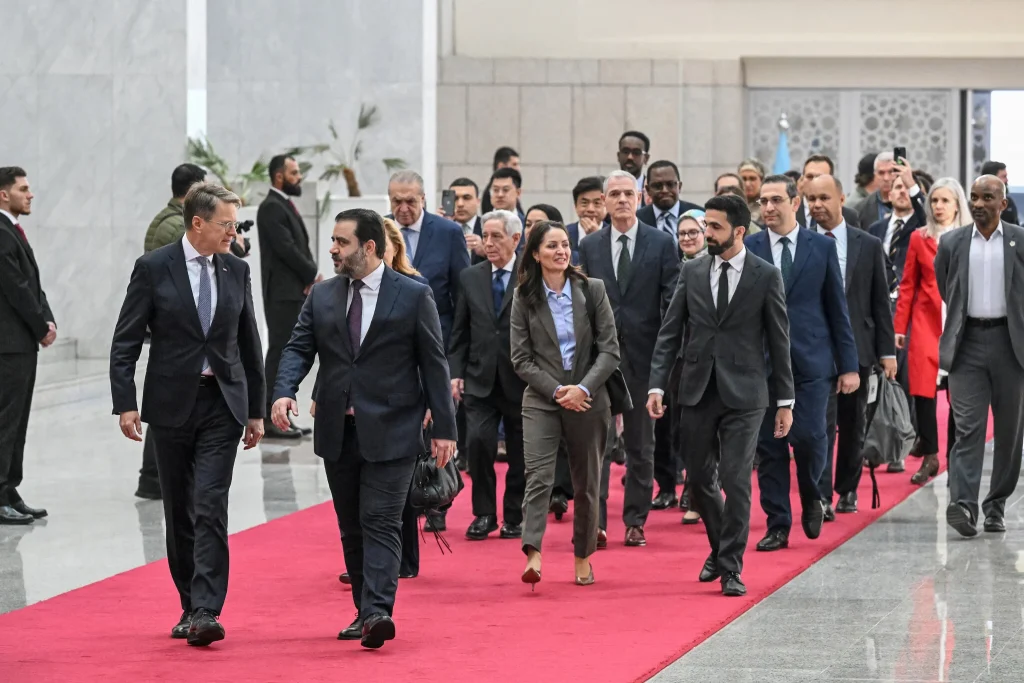

A UN Security Council delegation met with Syrian President Ahmed al-Sharaa in Damascus, marking the first visit by the Council to Syria since its founding in 1945, Asharq Al-Awsat plus agencies reported on December 5th.
The delegation, led by Slovenia’s UN ambassador and Council president Samuel Žbogar as well as several UN officials, held talks at the People’s Palace in Damascus. Discussions centred around ongoing Israeli attacks inside Syrian territory and the country’s political transition.
Ibrahim Olabi, Syria’s permanent representative to the UN, described the visit as a historic moment, which marked the council’s first unified stance in support of Syria.

The visit comes at a time of increased Israeli attacks on Syrian territory. Olabi stated “Israeli aggression on Syrian territory was one of the main points discussed.” Furthermore, Israeli prime minister Benjamin Netanyahu along with senior Israeli officials visited military positions in Syria seized by Israeli forces after the ouster of Bashar al-Assad, a move seen as threatening Syria’s sovereignty.
A push to urge the withdrawal of Israeli forces has been prevalent throughout the reign of Ahmed al-Sharaa, with Olabi previously requesting the UN Security Council to stop Israeli violations and implement resolutions such as the 1974 disengagement agreement. In addressing this the UN General Assembly adopted a resolution calling for Israel’s withdrawal from the occupied Golan Heights.
The visit also comes in light of the UN seeking to re-establish its presence in Syria, following the council’s lifting of sanctions on al-Sharaa. Žbogar, stated the delegation aimed to address the “lack of trust” in the UN-Syria relationship. He also referred to the significance of the meeting “at a crucial time for the region” in light of Israeli offensives in Syria and Lebanon.
UN spokesman Stéphane Dujarric said the UN hopes the visit will “increase dialogue” between Damascus and the international community.
Asharq Al-Awsat plus agencies, Maghrebi.org

Want to chase the pulse of North Africa?
Subscribe to receive our FREE weekly PDF magazine