Congo asserts control over cobalt with new export conditions
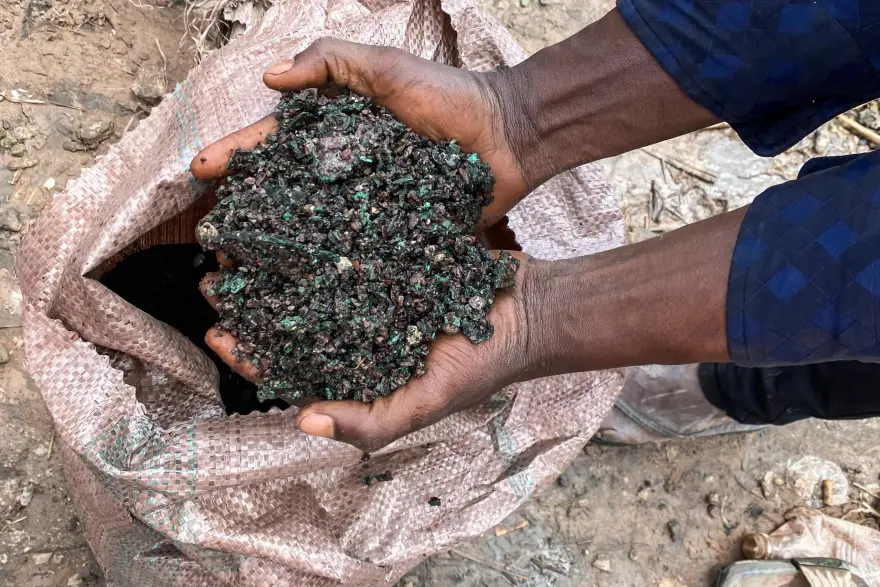
Miner shows dug up cobalt from Congo's mine (via swissinfo)

The Democratic Republic of Congo (DRC) introduced new export conditions for its key cobalt reserves that require companies to pay 10% of export royalties upfront within 48 hours and secure a compliance certificate from authorities, according to a Reuters report on December 8th.
Congo supplies 74% of the world’s cobalt and holds 72% of cobalt reserves, with its mines being subjected to unregulated practices, child labour, and mining deaths over the years. In October, the Congolese government introduced export quotas to make cobalt more traceable, regulating how much cobalt leaves the country.
These quotas were introduced in response to a global oversupply and crashing cobalt prices, when cobalt was priced as low as $10 a pound earlier this year. The government introduced the export quota after months of an export ban on cobalt.
The new export conditions involve multi-agency oversight as well as physical inspections of all shipments, including weighing and sealing of lots. The government has warned companies that non-compliance can be followed with license revocation.
As the Congolese government now regulates how much cobalt leaves the country, China’s CMOC and Glencore have the largest shares of exports. In 2026, the yearly export allowance will be 96,600 tons.
A state audit issued by the government had found $16 billion of underreported funds from companies like CMOC and Glencore on October 9th. The companies’ underreporting has cost the Congolese government and communities their development funds, which they are entitled to from an allocated 0.3% of mining companies’ revenue as per the 2018 mining code.
These measures reflect DR Congo’s renewed push to assert control over its mineral wealth and export conditions, mirroring a broader trend across Africa, as seen in Mali’s recent move to tighten its own mining rules.
However, China and the West continue to compete for access and influence in these key mineral reserves, particularly cobalt, which is referred to as the ‘battery metal’. Cobalt is used in batteries of EVs, mobile phones, and laptops, and continues to be in high demand.
Reuters, Maghrebi.org

Want to chase the pulse of North Africa?
Subscribe to receive our FREE weekly PDF magazine