Unemployment in Algeria: between data and political speeches
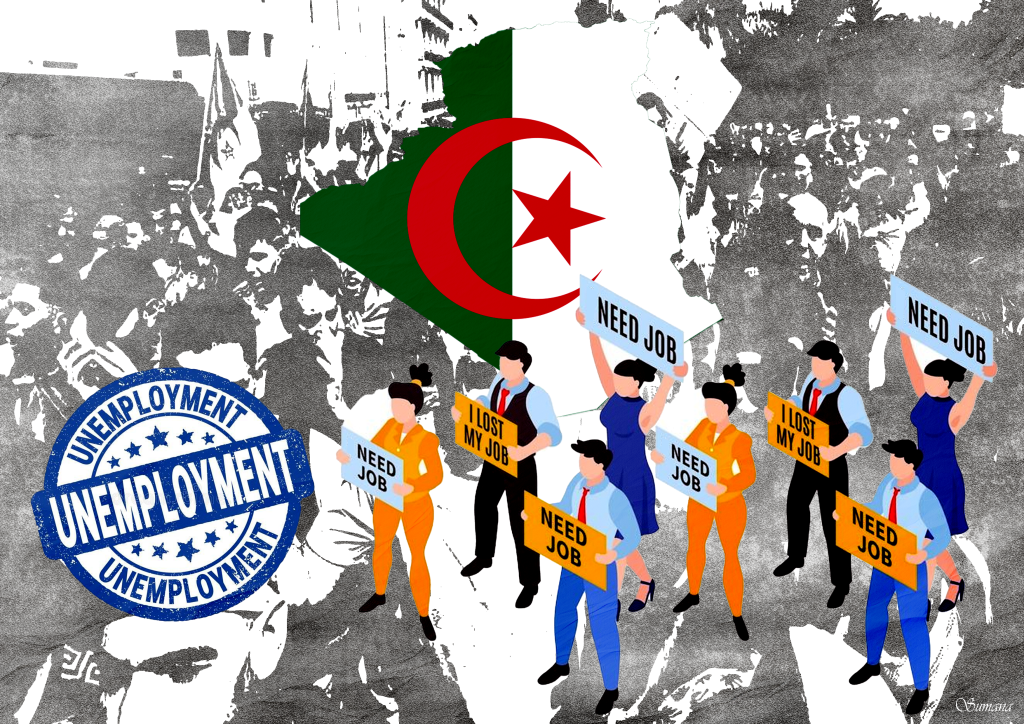

A statement by Algeria’s Minister of Labour Abdelhak Saihi has raised highbrows, after he said that “there was very little unemployment” in Algeria, according to opposition newspaper Le Matin on 10th December.
Saihi, who was only appointed in September 2025, was talking at a conference in Algiers and discussed his ministry’s achievements, with a raise in unemployment benefits and the creation of 1.8 million job opportunities since 2020. The budget for unemployment benefits now sits at over 400 billion dinars per year (roughly $3 billion), supporting 1.9 million people.
This is part of a wider range of reforms introduced by President Abdelmajid Tebboune last month, such as increasing the minimum wage and simplifying administration procedures.

Unemployment rates have reportedly improved, standing at 9.7% compared to an initial estimate of 12.7% according to the country’s Census Office. However, the rate of adults not in work tells a different story, with only 41.7% of adults ( aged over 15) being in employment.
There are significant differences between men and women: 63.9% of men are working, compared to only 19.2% of women. In addition, graduates are particularly vulnerable to unemployment, with 19% being unemployed, representing 31.4% of all job seekers. In fact, women are by far the highest number of recipients of unemployment benefits with 71% falling into this category, while 2.3 million young people also receive these benefits.
This situation is comparable to data from Morocco, where youth and graduate unemployment is high, and where joblessness amongst women has increased.
Saihi’s words, while based on actual data, led to controversy online as they seemed disconnected from the realities of many Algerians who struggle to secure employment. Nevertheless, the government has taken clear steps to support the most vulnerable members of society and to improve living standards, particularly with unemployment benefits, which were only introduced in 2022.
The minister also discussed the need to adapt to the changing requirements of the job market, mentioning the increasing demand for digital skills and online work, as well as the green economy sector. The conference was held with an audience of politicians and business owners’ associations, shaping the work sector in Algeria.
Le Matin, TSA Algerie, Maghrebi.org

Want to chase the pulse of North Africa?
Subscribe to receive our FREE weekly PDF magazine