Libya: Research team raises alarm over severe marine pollution
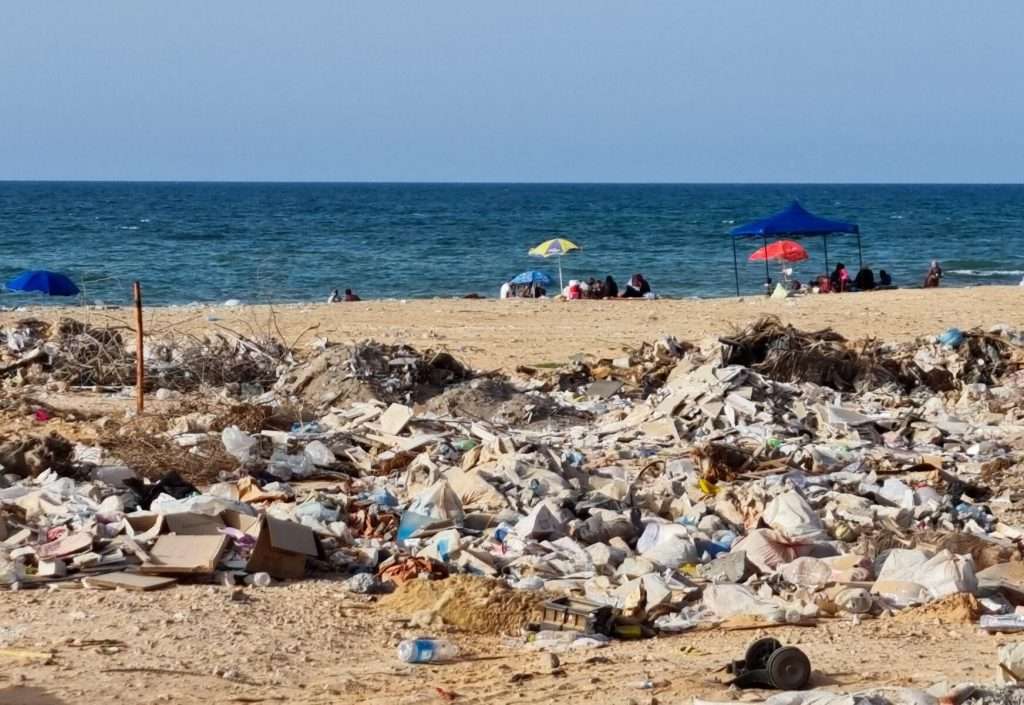
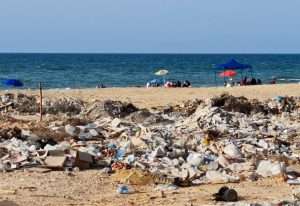
Libyans spend time at the beach at the capital Tripoli's waterfront, on August 21, 2021. - With untreated sewage in the water and rubbish piled on the sand, pollution on Tripoli's Mediterranean coast is denying the war-torn Libyan capital's residents a much-needed escape. (Photo by Mahmud TURKIA / AFP)
Severe marine pollution off the coast of Zuwara in western Libya has raised alarms among researchers, who warn that environmental degradation is threatening fish populations and broader food security, as reported by The Libya Observer on December 16.
The findings emerged during a scientific dive conducted to document a historic shipwreck near the Zuwara coastline. Instead of clear waters suitable for research, the team encountered poor visibility, widespread plastic waste and multiple dead fish. The unexpected conditions highlighted what researchers described as a rapidly deteriorating marine environment.
In addition to pollution, the team documented evidence of illegal blast fishing in the area. This practice, which involves the use of explosives to stun or kill fish, was observed to have caused significant harm not only to marine life but also to underwater heritage sites in Libyan waters. Such activity compounds the damage caused by pollution, accelerating the destruction of already vulnerable ecosystems.

Libya’s broader environmental crisis helps explain the severe marine pollution recently documented off the coast of Zuwara. Environment Minister Ibrahim Al-Arabi has described the country’s environmental situation as “catastrophic,” citing decades of government neglect and the intensification of armed conflict since 2011 as the primary culprits of environmental degradation.
He said biodiversity has sharply declined due to coastal erosion, unregulated construction and the impact of war, factors that mirror the degradation observed by scientists underwater near Zuwara. Together, the minister’s assessment and the research findings point to systemic environmental breakdown in Libya, worsened by political instability and weak environmental protection.
The team warned that continued neglect of environmental protections could lead to irreversible consequences. Without intervention, parts of the coastline risk becoming what researchers described as a “marine graveyard,” a term used to underscore the scale of ecological loss they observed.
Researchers stressed the need for urgent measures to address both pollution and destructive fishing practices. They cautioned that the decline of fish stocks poses a direct threat to food security in Libya, particularly for coastal communities that rely heavily on marine resources.
The Libya Observer, Maghrebi.org
Want to chase the pulse of North Africa?
Subscribe to receive our FREE weekly PDF magazine