Libyan army chief dies in plane crash near Turkish capital
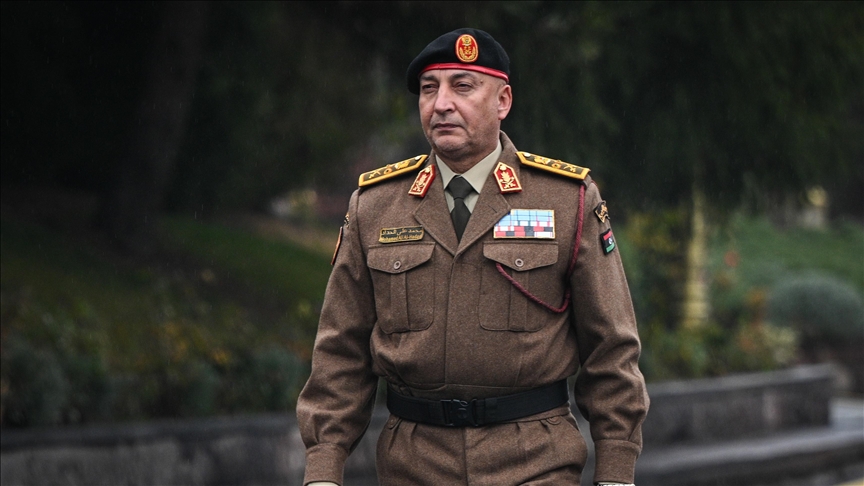
Just after taking off from Turkey’s Ankara Esenboga Airport, a plane carrying Libya’s army chief crashed, killing all on board, according to The New Arab plus agencies on December 23rd.
The current death toll of the crash stands at five, with the most senior figure among the victims being Libyan army Chief of Staff Mohammed Ali Ahmed Al-Haddad, who was departing Ankara after holding talks with the Turkish Defence Minister earlier in the day.
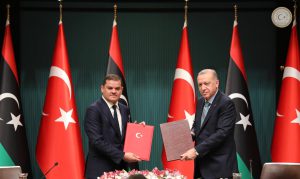
The Prime Minister of Western Libya’s Government of National Unity (GNU), Abdulhamid Dbeibeh, announced and publicly mourned Al-Haddad’s death by lamenting that “this is a great loss for the nation, for the military institution, and for all the people.”
He also confirmed that the commander of Libya’s ground forces, the director of its military manufacturing authority, an advisor to Al-Haddad, and a photographer from his office were also killed in the crash, according to Reuters on December 23rd.
Turkey’s Interior Minister, Ali Yerlikaya, wrote on his official X account that the aircraft took off from the airport at 5:10 pm GMT en route to Tripoli. Air control then lost all radio contact with the plane at 5:52 pm GMT.
The wreckage was subsequently found by local authorities close to the Kesikkavak village in Ankara’s Haymana district, approximately 45 miles south-west of Ankara.
The internationally recognised GNU formally announced an official mourning period of three days to be observed across Libya.
The crash occurred only one day after the Turkish parliament approved a motion submitted by the government to extend the Turkish military’s presence in Libya by two more years to oversee a mandate to preserve Libya’s security by stabilising a fragmented political landscape.
Ankara has long been the GNU’s principal backer. Turkish forces deployed in Libya notably repelled a military offensive launched in 2019 by de facto leader of eastern Libya, General Khalifa Haftar, to capture the capital of Tripoli and seize control of the entire country.
However, Turkey has since pivoted its long-term strategic approach towards a “one Libya” policy, under which it has significantly increased its diplomatic contact with the eastern Libyan administration.
Turkey’s extended military deployment in the volatile North African country reflects this push for unification, as does its recent support for United Nations-led initiatives oriented towards establishing a single government and a transition to civilian rule.
The New Arab plus agencies, Reuters, The Libya Observer, Maghrebi.org, Al Jazeera
Want to chase the pulse of North Africa?
Subscribe to receive our FREE weekly PDF magazine