Dr Mustafa Fetouri: Tripoli’s power grab risks deeper division

The Libyan political landscape, long defined by competing governments and institutional fragmentation, has recently delivered its most rent—and perhaps most confounding—invention yet: the Supreme Authority of the Presidencies (in Arabic, al-Hay’at al-‘Ulyā lil-Riyāsāt). Announced on 20 November 2025, in Tripoli, this body emerged from an agreement between the heads of the three most powerful western-based institutions—the Presidential Council (PC), the Government of National Unity (GNU), and the High Council of State (HCS). Its stated purpose is a “coordinating framework” intended to unify decision-making on strategic issues and break policy deadlocks. Yet, for many observers and rivals in the east, this is little more than jargon without any substance—a sophisticated smoke-and-mirrors mechanism designed not to solve Libya’s crisis, but to prolong the tenure of its incumbent leaders. By gathering executive power in an informal, opaque council, the Authority raises the crucial question: is this a genuine attempt at institutional harmony, or merely the latest power grab by Tripoli elites intent on consolidating control and keeping national elections permanently off the table?

The ink was barely dry on the three-party declaration before the eastern-based government, led by Prime Minister Osama Hammad but not internally recognised, issued a stern and categorical rejection. Hammad’s administration immediately denounced the Supreme Authority as “constitutionally and legally void,” asserting that none of the signatory entities—which include an advisory body (the HCS) and a caretaker government (the GNU)—possesses the authority to establish a sovereign body or modify the state’s leadership structure. This, they argued, is a power reserved “exclusively for the elected legislative authority, the House of Representatives.” Furthermore, many also contend that the new entity fundamentally violates the Libyan Political Agreement (LPA) of 2015, which serves as the de facto constitutional framework for the current institutions. The formation, critics contend, is a clear act of institutional self-preservation, a direct threat to national unity designed to bypass the House of Representatives and disrupt the long-stalled electoral process. In a significant escalation of rhetoric, Hammad specifically warned that the continued political tampering in Tripoli could force eastern authorities and local constituencies to openly and urgently push for an autonomy model—a direct challenge to Libya’s territorial integrity and further proof that the Authority is manufacturing an unconstitutional crisis to maintain the rentier status quo.
The Authority’s most immediate political objective appears to be the calculated obstructing of the UN Support Mission in Libya (UNSMIL) roadmap towards elections, thereby justifying their prolonged tenure. The three signatories are all principals whose mandates have either technically expired (HCS) or have been questioned (GNU/PC) since the 2021 election failure. By establishing a new, self-styled “supreme sovereign authority,” they are creating a fourth center of power that complicates the governance structure and delays the adoption of a unified constitutional basis— prerequisite for national elections which is the top UNSMIL objective. The lack of any immediate official reaction from foreign powers influential in the Libyan file, such as Turkey, Egypt, or Russia, coupled with the silence from UNSMIL, effectively isolates the new Supreme Authority on the international stage. On 21 November, one day after the Authority was announced The International Follow-up Committee for the Berlin Process, met in Tripoli without discussing the new entity. Their statement also did not mention it.
The Authority’s mandate to coordinate on “economic and security issues” is viewed as the secondary, but equally vital, aim of the new entity: institutionalized financial control over Libya’s oil wealth—the cornerstone of its rentier state model. This action follows the contentious, high-profile replacement of longtime CBL Governor Al-Siddiq Al-Kabeer in 2024, with the new Governor, Naji Issa, now operating within a climate of acute political pressure but enjoys certain degree of support from foreign actors. The Authority thus allows the current elites to pool their influence over the national accounts, ensuring that the existing political architecture remains profitable and accountable only to themselves, while the jargon of coordination becomes the substance of delay.
The current political architecture is not intended to be dismantled, but merely managed for their collective survival.
The Authority’s creation is inseparable from the rapidly evolving security architecture, specifically the actions of the LNA General Command in the east. Field Marshal Khalifa Haftar has recently made a series of appointments—most notably promoting his sons, Saddam Haftar as Deputy Commander-in-Chief and Khaled Haftar as Chief of Staff—a clear sign that the LNA is being cemented as a family business and an enduring political-military entity. This move directly challenges the Presidential Council’s constitutional role as the Supreme Commander of the Armed Forces.

The Supreme Authority of the Presidencies, with its explicit mandate to coordinate on “security issues,” is interpreted as the Tripoli elite’s answer: an attempt to create a formal, high-level counter-hierarchy in Western Libya. By institutionalising coordination among the three presidents, they are asserting political control over the myriad Western armed groups and attempting to unify decision-making for their own armed forces. The goal is to establish a cohesive, legitimate Western command structure that can strategically counter the consolidation of the LNA under the Haftar family, ensuring that the control of the capital and the West remains firmly outside the reach of Benghazi and its dynastic military ambitions.
READ: Martin Jay: Western media finally confront Ukraine’s bleak reality
In effect, the creation of the Supreme Authority of the Presidencies serves as a definitive statement from the Tripoli elite: the current political architecture is not intended to be dismantled, but merely managed for their collective survival. By consolidating power under this new, unconstitutional umbrella, the three presidents have successfully manufactured a complex, ambiguous entity that provides cover for institutional self-preservation while allowing them to pool influence over the nation’s accounts and counter rival military ambitions. It is the clearest indicator yet that the powerful factions currently controlling the levers of the Libyan state are prioritizing the continuation of the profitable rentier status quo over the urgent need for national reconciliation and popular elections. Without the crucial element of international support or domestic legal legitimacy, this “rent political invention” is unlikely to unify the country. Instead, it risks further deepening Libya’s political fragmentation, hardening the divisions with the eastern authorities, and ensuring that the path to a sovereign, elected government remains indefinitely suspended.
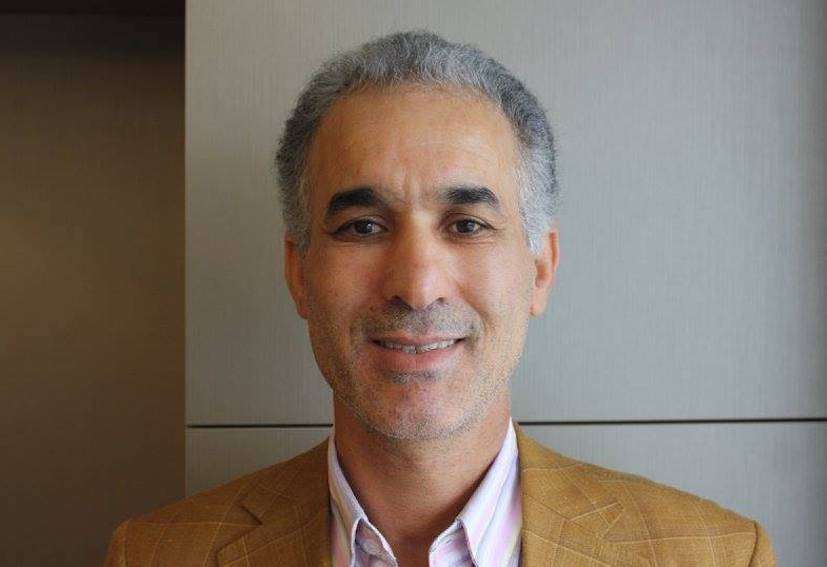
The views expressed in this article belong to the author and do not necessarily reflect the editorial policy of Maghrebi.org. Mustafa Fetouri is a Libyan academic and freelance journalist. He is a recipient of the EU’s Freedom of the Press prize.
If you wish to pitch an opinion piece please send your article to alisa.butterwick@maghrebi.org.

Want to chase the pulse of North Africa?
Subscribe to receive our FREE weekly PDF magazine