Libya reopens national museum

Libya’s largest museum has reopened after nearly 14 years of closure, marking a symbolic moment in the country’s efforts to restore its cultural institutions after years of conflict, as reported by Reuters on December 13. The National Museum in Tripoli resumed operations following extensive renovations, underscoring what officials described as progress in rebuilding state structures.
The museum had been shut since 2011, when a NATO-backed uprising ended the rule of longtime leader Muammar Gaddafi. During that period, the building itself was closely associated with the former ruler, who once addressed crowds from its ramparts.
Work to restore the site began in March 2023 under the Tripoli-based Government of National Unity (GNU), which took office in 2021 through a United Nations-backed political process.

Speaking at a reopening ceremony on December 12, 2025, GNU Prime Minister Abdulhamid al-Dbeibah said the event went beyond culture. “The reopening of the National Museum is not just a cultural moment but a live testimony that Libya is building its institutions,” he said.
Constructed in the 1980s, the museum spans 10,000 square meters of exhibition space and houses collections that trace Libya’s history from prehistoric times through the Roman, Greek and Islamic eras.
Museum director Fatima Abdullah Ahmed said the initial phase will prioritize educational access. Schools are currently being allowed to visit ahead of a full public opening planned for the beginning of the year.
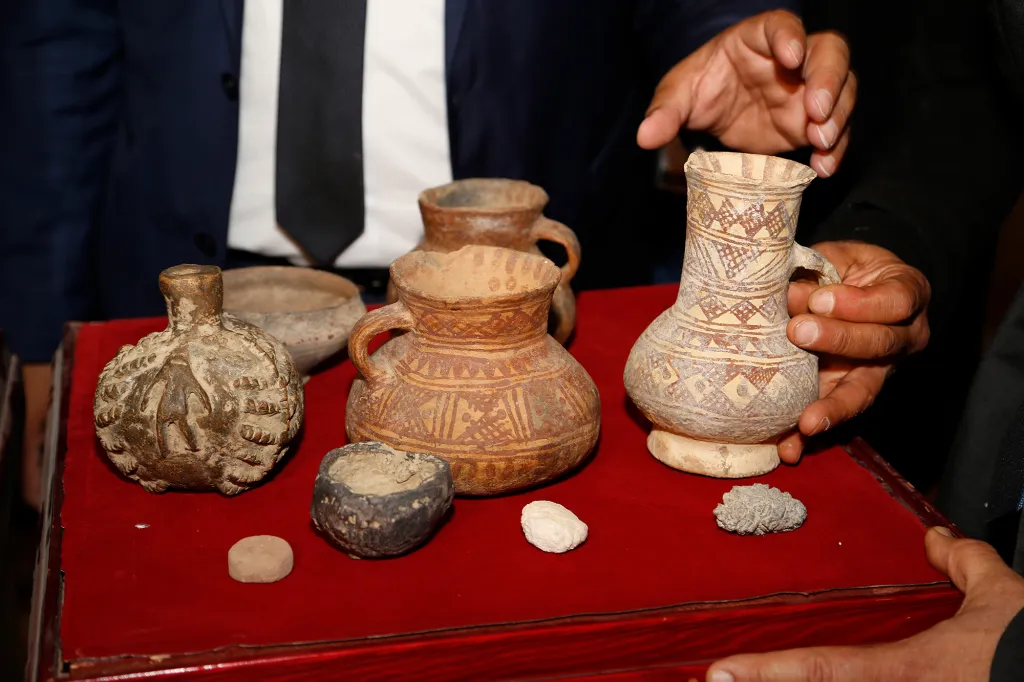
The reopening comes as Libya continues efforts to recover cultural property looted after 2011. Mohamed Farj Shakshoki, chairman of the antiquities department’s board, said 21 artefacts have already been returned from France, Switzerland and the United States, with negotiations ongoing for additional items held in Spain and Austria. In 2022, the United States returned nine artefacts, including funerary stone heads, urns and pottery.
The presence of smuggled Libyan artefacts in Western countries such as France, the United States and Switzerland is evocative of the broader legacy of Western dominance over Libya’s sovereignty and cultural heritage. While the removals occurred amid the chaos following the 2011 fall of Gaddafi, rather than during a period of formal colonial rule, their destination in Western institutions echoes a common pattern throughout history, in which artefacts from North Africa were extracted, traded or displayed abroad, often beyond the control of their countries of origin.
For Libyan officials, the gradual recovery of these items underscores ongoing efforts to reclaim not only cultural objects, but their history and national institutions after decades in which foreign powers have shaped, interpreted or removed aspects of Libya’s past and present.
Libya is home to five UNESCO World Heritage sites. While all were listed as endangered in 2016 due to instability, the ancient city of Ghadames was removed from the danger list in July after improvements in security conditions.
The EU–Libya initiative to promote cultural tourism and protect World Heritage sites that started in September 2025 complements the reopening of Tripoli’s National Museum and highlights the international efforts to restore and showcase Libya’s culture and history.
Unveiled at the ancient city of Leptis Magna and backed by the UN-supported Government of National Unity, the effort reflects attempts to rebuild institutions, attract visitors and safeguard archaeological sites damaged since 2011. Together, the museum’s revival and the tourism partnership signal Libya’s intention to reclaim its cultural heritage while diversifying its economy beyond oil.
Reuters, Maghrebi.org

Want to chase the pulse of North Africa?
Subscribe to receive our FREE weekly PDF magazine