Dr. Azeem Ibrahim: The normalisation of global displacement
The most dangerous development in today’s global refugee crisis is not its scale, but how familiar it has become. According to the UN, more than 110 million people are now forcibly displaced worldwide, a figure that has nearly doubled in the past decade. Yet instead of prompting urgency, this unprecedented level of displacement is increasingly treated as a permanent feature of the international system. Wars continue, people flee, camps expand, and the world adapts to the numbers rather than confronting what they represent.
This normalization should alarm us. When displacement becomes background noise, its political, economic, and security consequences deepen rather than fade. The danger is not only humanitarian suffering, but the quiet erosion of international norms built on the assumption that forced displacement is exceptional, temporary, and resolvable.
Historically, refugee flows were treated as evidence of political failure demanding correction. Large-scale displacement triggered diplomatic pressure, emergency funding, and sustained efforts to end conflicts or enable safe return. Today, the response is increasingly managerial rather than strategic. Camps are designed to last decades. Humanitarian appeals are chronically underfunded. Policymakers speak of resilience and coping mechanisms instead of resolution.
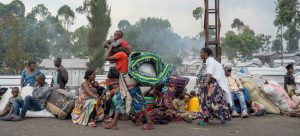
The data reflects this shift. The average length of displacement has risen steadily, with many refugees now spending 15 to 20 years away from home. More than three-quarters of the world’s refugees are hosted in low and middle-income countries, often in regions already grappling with unemployment, inflation, and fragile public services. Meanwhile, resettlement opportunities in wealthy states have stagnated, covering only a tiny fraction of global need.
This matters because displacement is not a neutral condition, Prolonged displacement consistently correlates with economic stagnation, social tension, and insecurity. Large populations living without legal status or access to formal labor markets distort local economies and place sustained pressure on housing, healthcare, and education systems. Over time, this fuels resentment in host communities and despair among refugees, creating environments where criminal networks and extremist groups can operate more easily.
The global response increasingly assumes these risks are manageable so long as displacement is geographically contained. Refugees are kept close to conflict zones. Borders harden further away. Responsibility is shifted on to front-line states, while international burden sharing shrinks. The result is a system that preserves stability for some by exporting instability to others.
This approach is now colliding with another powerful force: climate change. Climate-related shocks are rapidly becoming a major driver of displacement, often interacting with conflict and political fragility. The World Bank estimates that up to 216 million people could be internally displaced by climate impacts by 2050 if current trends continue. Extreme heat, water scarcity, flooding, and crop failure are already accelerating displacement across the Middle East, South Asia, and Africa.
Climate-driven displacement differs from traditional refugee flows in one crucial way: It is rarely temporary. When farmland becomes unusable due to drought or salinization, or when coastal areas are repeatedly flooded, return is often impossible. These pressures compound existing political tensions and can turn slow-moving environmental stress into sudden humanitarian crises.
The Middle East is particularly exposed. Rising temperatures are increasing water scarcity, undermining agriculture, and accelerating urban migration. In fragile states, these pressures interact with weak governance and conflict, amplifying displacement risks. Yet climate displaced populations often fall through legal and policy gaps, receiving less protection and attention than those fleeing war alone.
At the same time, humanitarian systems are under severe strain. Despite record displacement, global humanitarian funding is failing to keep pace. In recent years, major UN appeals have been funded at less than 60 percent of requirements, forcing agencies to cut food rations, healthcare services, and education programs. These reductions do not solve displacement; they entrench it, stripping people of the tools needed to rebuild their lives.
The normalization of displacement also weakens international law. Refugee protection frameworks were built on the assumption that forced displacement was a deviation from the norm. When displacement is treated as permanent, the obligation to prevent it and resolve its causes quietly erodes. Temporary protection becomes indefinite exclusion. Rights give way to containment.
This has serious implications for regional stability. Host countries that have shown extraordinary generosity face mounting political and economic pressure. Refugees, denied legal pathways to self-reliance, remain dependent on shrinking aid. Children grow up without education or prospects. Human capital is wasted on a massive scale. These are not just moral failures. They are strategic ones.
The most dangerous development in today’s global refugee crisis is not its scale, but how familiar it has become.
Normalization also distorts global priorities. Conflicts that generate refugees fade from diplomatic focus precisely because their consequences appear managed. As long as displacement does not cross certain borders, it loses urgency. This creates a dangerous incentive structure in which unresolved crises are tolerated rather than addressed.
History suggests this approach is short sighted. Prolonged displacement rarely remains contained. It drives onward migration, fuels instability, and eventually reaches the doorsteps of those who assumed distance equaled insulation. The costs deferred today are paid later, often at far greater expense.
Reversing this trajectory does not require unrealistic solutions. It requires restoring the principle that displacement is a failure, not a baseline. Refugee crises must once again be treated as political problems demanding political solutions, supported by sustained diplomacy, conflict prevention, and climate adaptation strategies. Host countries must be supported not as holding zones, but as partners whose stability is a shared global interest.
READ: Martin Jay: Britain and the collapse of free speech
Above all, the world must reject the idea that living without a country, rights, or future can ever be normal. Mass displacement is not an inevitable condition of modern life. It is a warning signal. Ignoring it does not make it safer. It makes it permanent.
The views expressed in this article belong to the author and do not necessarily reflect the editorial policy of Maghrebi.org. Dr. Azeem Ibrahim is the director of special initiatives at the Newlines Institute for Strategy and Policy in Washington, DC. X: @AzeemIbrahim
If you wish to pitch an opinion piece, please send your article to grace.sharp@maghrebi.org
Want to chase the pulse of North Africa?
Subscribe to receive our FREE weekly PDF magazine