French report: Libya is deteriorating into a failed state
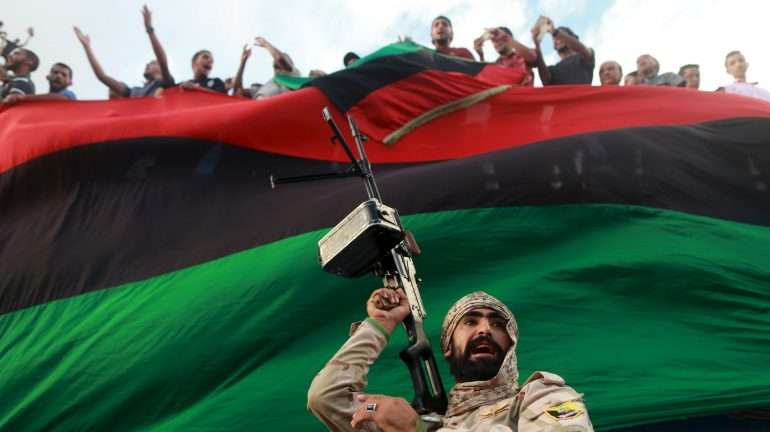
A French report which investigated Libya’s political status quo concluded that the country is deteriorating into a failed state, highlighting that it is effectively governed by militias rather than institutions, according to the Libya Review on December 25th.
The report, which was conducted by French media outlet Courrier International, found that the state of widespread disorder and instability in which Libya finds itself is not merely an unwelcome yet temporary side-effect of a fragile transitional process, but instead, is the mark of a highly fragmented political landscape largely defined by rival sub-state militias vying for territorial control.
This issue is particularly pronounced in the official capital of Tripoli, alongside various other cities in western Libya that are ostensibly governed by the internationally recognised and UN-backed Government of National Unity (GNU).

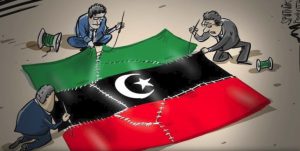
Libya’s governance structure remains split into two competing political administrations: the GNU in the west and the House of Representatives in the east, whose de facto leader is the Libyan National Army (LNA) Commander in Chief, General Khalifa Haftar.
Upon outlining the conclusions made while presenting the results of extensive consultations tied to a UN-backed “structured dialogue”, the United Nations Support Mission in Libya (UNSMIL) stressed that to secure any semblance of political stability, Libyan militias must be disarmed and integrated into official state institutions.
However, some experts do not believe that key figures in power see such sweeping reforms as in their best self-interest.
Senior Associate Research Fellow at the Institute for International Political Studies in Milan, Federica Saini Fasanotti, stated that “I think that at the moment every political actor is very happy about the situation [in Libya]: a proto-state where militias and warlords act with no accountability at all, able to perpetrate crimes of every kind.”
Earlier this year, GNU Prime Minister Abdulhamid Dbeibeh vowed to disarm and formally integrate militias across western Libya into state institutions. However, critics believe that this monopolisation has not yet materialised precisely because the GNU is dependent on the very same armed groups to maintain its position.
This over-reliance places political weight and material power firmly in the hands of armed groups, who are further emboldened and legitimised by European migration control deals which grant them financial resources and implicit recognition as genuine security partners.
This has led to an increase in violent clashes between militias, which are triggered by disputes over control of local security zones and instil widespread fear and panic amongst civilians.
East Libya too is mired in systemised dysfunction catalysed by self-interested elites undermining Libyans quality of life. An investigative report by The Sentry revealed that fuel smuggling out of Libya “has escalated into a major national crisis.” Saddam Haftar, son of Khalifa Haftar, is reportedly the driving figure behind the illicit trade.
The Sentry calculated that in 2024 alone, over $6.7 billion worth of fuel was smuggled out of Libya, a figure that could have tripled spending on the country’s ailing healthcare and education sectors.
The report by Courrier International ultimately concludes that Libya has deteriorated into a failed state where chaos has been institutionalised, with civilians bearing the brunt through rising food and medicine prices alongside chronic political instability.
Libya Review, Courrier International, Maghrebi.org, The Soufan Centre, The Sentry, The Libya Observer
Want to chase the pulse of North Africa?
Subscribe to receive our FREE weekly PDF magazine